Part One · 1–20
Fire & Iron
Reading heat, preheating cast iron, seasoning, smoke points, lids, coals, grease fires, and the thermometer that beats experience.
20 lessons120 things I learned cooking for working men in Gonzales County, Texas — written down so the useful parts do not disappear with the people who knew them.
“Nothing in this book was ever cooked to be looked at.”
One payment · Digital edition · 30-day money-back guarantee · Checkout handled by Gumroad
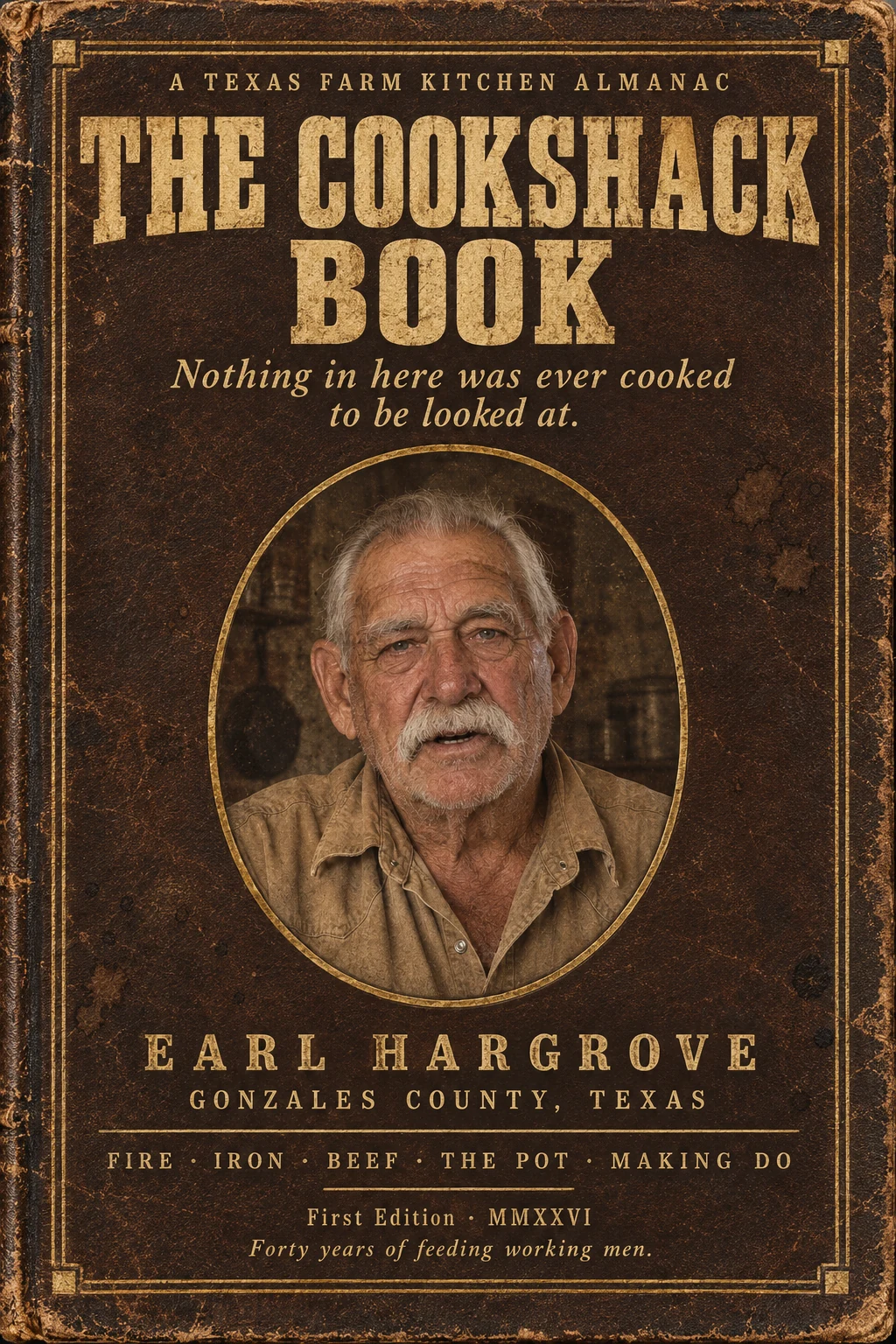
A recipe can tell you what to buy and how long to leave it on the stove. This book is built for the moment something goes wrong: the pan cools, the beans stay hard, the beef turns tough, the dough fights back, or the old rule simply does not hold anymore.
The book stays plain on purpose. You get the thing itself, the tools you actually need, the steps, the reason it works, the common way people wreck it — and the place where the method stops being useful.
Earl keeps the parts that still work and says so when the modern tool wins. A ten-dollar thermometer beats an experienced eye on internal temperature. A refrigerator beats a warm counter for long storage. Tested canning methods beat family folklore when safety is on the line.
The 120 lessons are ordered by where they live in a working kitchen, not by what looks impressive on a table.
Reading heat, preheating cast iron, seasoning, smoke points, lids, coals, grease fires, and the thermometer that beats experience.
20 lessonsChuck, brisket, shank, round, ground beef, dry salt, browning, resting, doneness, and getting tenderness without buying the expensive cut.
22 lessonsBeans, hard water, acid, simmering, stew, chili, rice, soup, reheating, and freezing a long-cooked pot without undoing the work.
22 lessonsAda’s biscuits, cold fat, buttermilk, cornbread, tortillas, warm-weather dough, dumplings, yeast bread, gravy, and stale bread.
20 lessonsPot coffee, dairy, butter, safe cultured foods, root storage, eggs, rendered fat, preservation principles, and tested canning only.
18 lessonsNo eggs, no butter, no milk, no onions, no meat, yesterday’s beans, bones, buying cheap without buying bad, and cooking when you’re tired.
18 lessons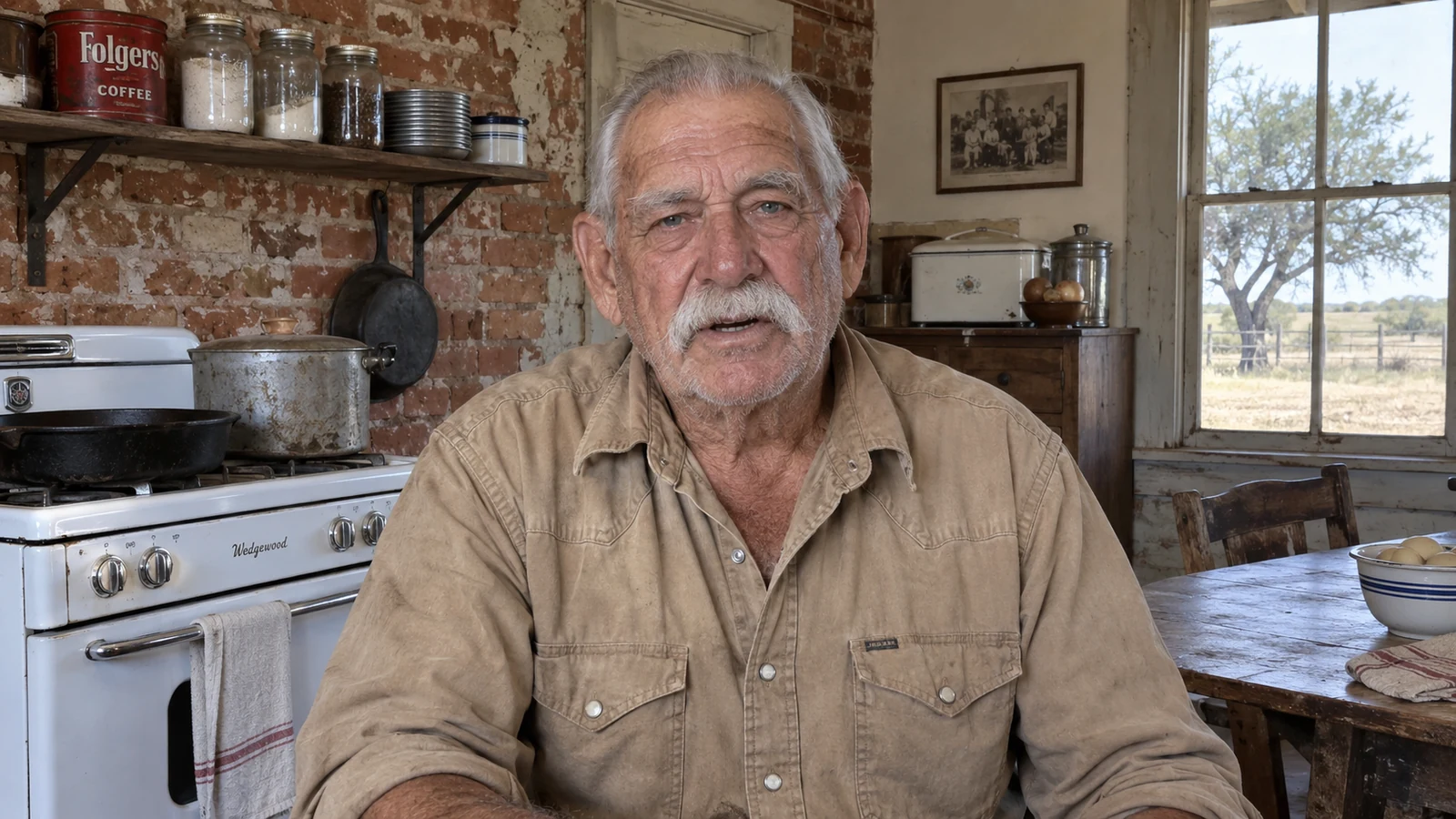
Earl’s father Roy died in 1979 without writing down the things he knew. His mother Ada died in 1988, and some of the hand knowledge behind her bread and biscuits went with her. That loss is the reason this book exists.
“A man spends fifty years working out how to do a thing right and then he dies on a Tuesday and it is gone.”
So the lessons were numbered. Not polished into nostalgia. Not turned into a chef’s cookbook. Just written down plainly — including the mistakes, the limits, and the places where a modern tool is better.
Earl Hargrove is 84 and lives in Gonzales County, Texas. For four decades, harvest and branding seasons put eight to fifteen working men at the table, twice a day. The kitchen was simple: a fourteen-inch cast-iron skillet, a heavy pot, a lid that fit, one knife, a grease can, and a fire out back under the shed.
The experience was big, but the book is written for an ordinary home kitchen. Where quantities matter, Earl says so. Everywhere else, a pot is a pot.
His son Dale set up the camera that started the videos. The Cookshack Book is what happened when “tell them what you know” turned into “write it down before it’s gone.”
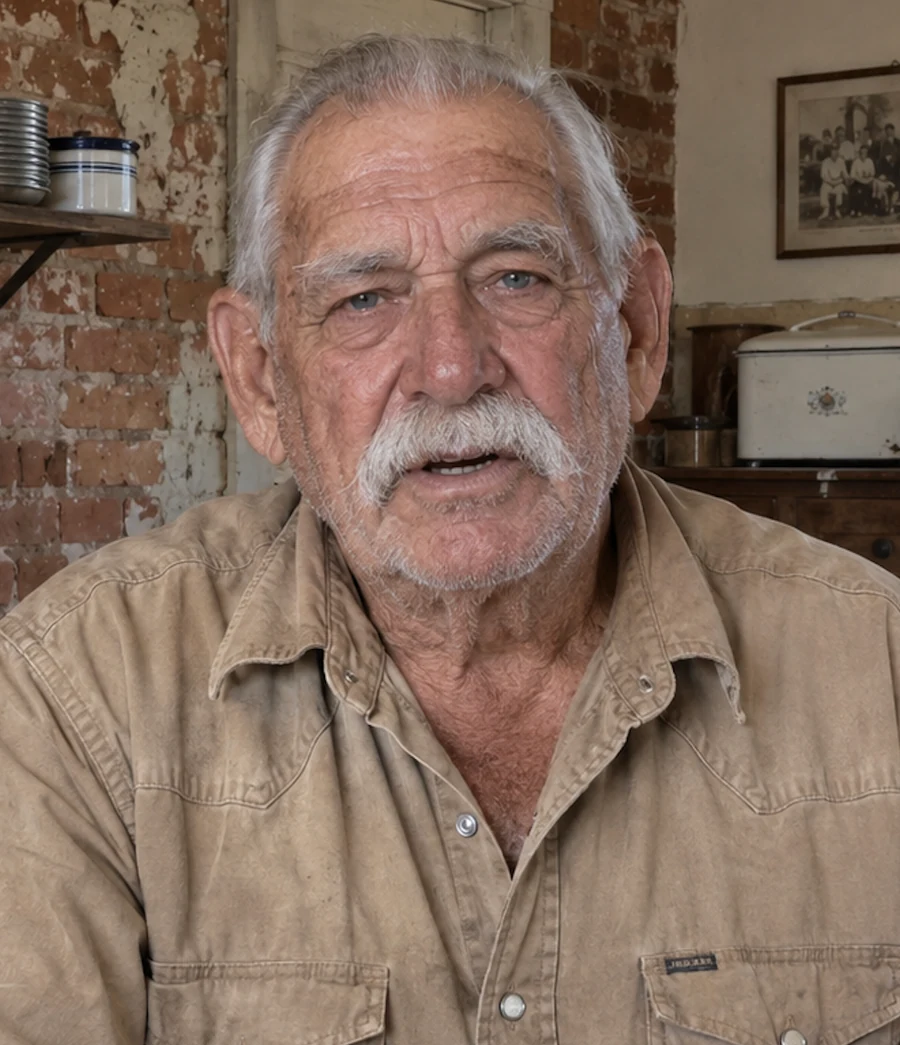
Once you understand what heat, water, salt, fat, acid, time, and pan mass are actually doing, you can fix a dish without waiting for a recipe to rescue you.
The book does not sell every old practice as wisdom. Some were useful because people lacked better tools. Some are still excellent. Some should stay in the past.
The core equipment is heavy iron, a pot, a fitting lid, a knife, a spoon, tongs, and an instant-read thermometer. Nothing in the book is built around buying a machine first.
The method index is organized around technique and trouble: browning, hard beans, gummy rice, tough beef, smoke points, dough handling, storage, reheating, and more.
Short notes on the parts of the book that stood out most.

“I bought it for the cast-iron section and ended up reading the parts on beans and cheap beef straight through. The failure-mode notes are the part I keep coming back to.”

“It reads like somebody standing beside the stove telling you what matters and what does not. No fancy equipment, and the book is willing to say when the old method is worse.”

“The beef section paid for my attention by itself. I finally understood why crowding the pan was giving me gray meat instead of a crust.”
If the book is not useful to you, request a refund within 30 days of purchase under the refund policy. Refunds are returned through the original payment method where supported by Gumroad/payment processing.
Not in the usual sense. There are recipes and complete methods inside, but the book is built around principles: what the food is doing, what to watch, why a method works, how it fails, and where it does not apply.
No. Cast iron appears often because it is what Earl used, but the book repeatedly explains what changes with other pans and modern stovetops. Outdoor-fire lessons are their own part of the book, not a requirement for using the rest.
The book is deliberately conservative where food safety matters. It distinguishes old practice from what should be done today, and the canning section points readers toward tested methods rather than improvisation.
This listing is for the digital edition sold through Gumroad. Gumroad handles checkout and digital delivery after purchase.
You have 30 days from purchase to request a refund. See the full Refund Policy in the footer for conditions and process.
$39 is the current launch price shown on this site. The regular reference price is $99. Any future price change will be shown before checkout.
Fire. Iron. Beef. The pot. Bread. Coffee. Making do. Forty years in one working kitchen, put on the page before it disappears.
Digital edition · one payment · 30-day refund guarantee